
 EN
EN VI
VI IT
IT ES
ES TH
TH PT
PT LV
LV NL
NL RU
RU FR
FR DE
DE AR
AR UZ
UZ


Why Importers Choose Certified Pre-Owned Vehicles from China
The global automotive landscape is undergoing a structural shift. As emerging economies in Africa, Central Asia, and Southeast Asia accelerate their infrastructure and logistics development, the demand for reliable, cost-effective commercial and passenger transport has reached unprecedented heights. For cost-sensitive markets, brand-new vehicles often present a prohibitive capital barrier. Consequently, purchasing pre-owned vehicles sourced internationally has evolved from a niche alternative into a strategic procurement model.
However, importing used cars has historically been fraught with friction: opaque vehicle histories, unpredictable mechanical reliability, and convoluted cross-border logistics. Overcoming these hurdles requires a paradigm shift—moving away from traditional, unregulated broker models toward institutionalized, transparent export ecosystems. Enter Moluoni, a vanguard in the cross-border automotive supply chain, transforming how international buyers source pre-owned vehicles from China through rigorous engineering standards, complete documentation, and seamless export logistics.
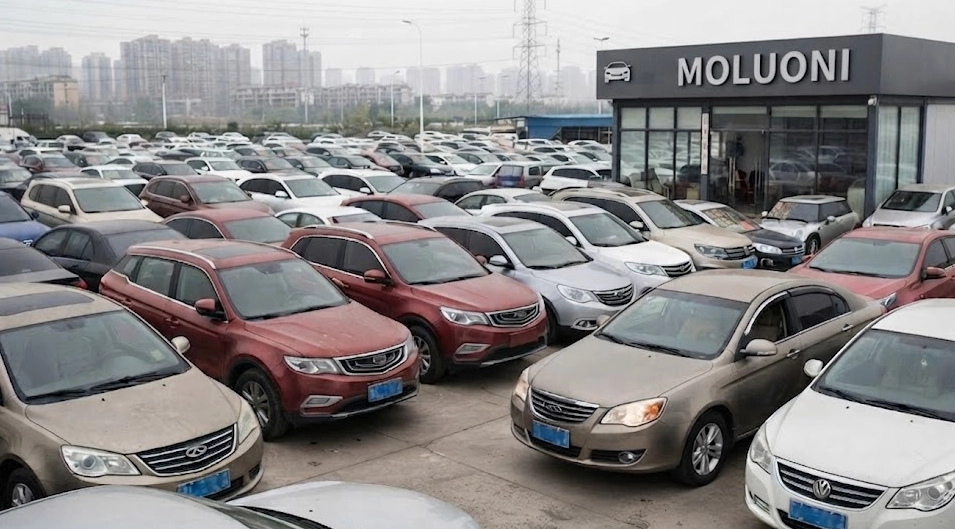
The Mechanical Reality: Why a 360-Degree Inspection Protocol is Non-Negotiable
When procuring china second hand cars for export, the primary operational risk is hidden mechanical and electrical degradation. Unlike domestic transactions where recourse is geographically localized, international buyers face severe friction if a vehicle arrives with undisclosed powertrain faults or electrical harness corrosion.
Mitigating this risk demands an uncompromising, standardized diagnostic framework. Every vehicle processed through professional export channels must undergo a comprehensive evaluation covering critical operational domains:
● Powertrain and Drivetrain Integrity: Utilizing advanced On-Board Diagnostics (OBD-II) scanners alongside manual compression testing to assess internal engine wear, transmission shift smoothness, and differential lash.
● High-Voltage and Electrical Architecture: For both traditional internal combustion engine (ICE) vehicles and the rapidly expanding fleet of Chinese electric vehicles (EVs) and hybrids, technicians perform exhaustive insulation resistance tests, battery State-of-Health (SOH) diagnostics, and parasitic drain evaluations.
● Structural and Chassis Metrology: Utilizing laser alignment and lift inspections to verify frame geometry, suspension component wear (control arms, bushings, dampers), and brake rotor thickness tolerances.
This exhaustive vetting culminates in an official, printed mechanical and electrical condition report. For fleet operators and individual buyers alike, this documentation bridges the trust gap, ensuring that every vehicle performs reliably upon arrival.
Economic Arbitrage: Unlocking Value Without Compromising Quality
The fundamental economic driver behind sourcing pre-owned Chinese vehicles for international markets lies in significant capital efficiency. Driven by rapid domestic automotive turnover and aggressive electrification cycles, China’s secondary vehicle market boasts an immense inventory of late-model, low-mileage automobiles.
Savvy procurement agents leverage this market dynamic to secure high-utility assets at 30% to 45% lower costs than equivalent new vehicles. This price differential is transformative for burgeoning logistics networks, ride-sharing fleets, and regional distributors:
● Accelerated Return on Investment (ROI): Lower initial capital expenditure drastically shortens the payback period for commercial transport fleets and last-mile delivery services.
● Access to Advanced Tech Stacks: Buyers can acquire late-model pre-owned vehicles equipped with modern infotainment systems, advanced driver-assistance systems (ADAS), and fuel-efficient powertrains at a fraction of factory-fresh MSRPs.
● Mitigated Depreciation Curves: Because the steepest part of the depreciation curve has already been absorbed by the initial owner, subsequent resale value remains relatively stable, protecting long-term asset value.
Flexible Procurement: From Single-Unit Trials to Bulk Container Freight
Scaling an automotive import business requires supply chain agility. Whether an independent dealer requires a single-unit trial purchase to evaluate market reception or a major logistics enterprise demands bulk container wholesale shipments, the operational infrastructure must adapt.
Modern logistics engineering has optimized vehicle transport efficiency through two primary mechanisms:
● Single-Unit Ro-Ro (Roll-on/Roll-off) Shipping: Ideal for cost-effective individual vehicle acquisition or low-volume sampling, ensuring the vehicle is driven directly onto dedicated car-carrier vessels.
● Containerized Multi-Vehicle Shipping: Utilizing specialized racking systems within standard high-cube shipping containers to safely secure multiple vehicles, optimizing freight costs per unit for bulk wholesale buyers.
Combined with end-to-end export customs brokerage, this logistical fluidity ensures that vehicles transition seamlessly from domestic reconditioning hubs to international maritime ports of entry.
Conclusion: Redefining Global Trust in Chinese Automotive Exports
The evolution of the secondary automotive market in China represents a massive opportunity for developing economies. By demanding rigorous mechanical verification, transparent maintenance documentation, and flexible supply chain solutions, international buyers can bypass legacy risks. Through the integration of institutionalized inspection standards and customer-centric logistics, platforms like Moluoni are setting a new benchmark for reliability—proving that high-quality, cost-effective pre-owned mobility is universally accessible.