
 EN
EN VI
VI IT
IT ES
ES TH
TH PT
PT LV
LV NL
NL RU
RU FR
FR DE
DE AR
AR UZ
UZ


What to Look for When Buying Toughened Safety Glass
When buying toughened safety glass, price and thickness are only part of the decision. For architectural projects, commercial buildings, doors, partitions, facades, balconies, shower enclosures, and other applications, the wrong glass specification can create problems that are expensive to correct after installation.
A better purchasing strategy starts with the application, then considers glass type, thickness, dimensions, processing, safety requirements, quality control, and supplier capability.
Toughened glass is a heat-treated form of glass designed to provide higher mechanical and thermal resistance than ordinary annealed glass. When it breaks, it generally fractures into much smaller pieces, reducing the likelihood of serious cutting injuries. However, toughened glass is not automatically the right solution for every safety application. The complete glazing system and the consequences of breakage must also be considered.
So, what should buyers actually look for?
1. Start With the Application, Not the Glass Thickness
One of the most common purchasing mistakes is asking a supplier for “10 mm toughened glass” before explaining where the glass will be installed.
Thickness matters, but it does not determine the entire performance of a glazing system.
For example:
| Application | Key Purchasing Considerations |
| Glass doors | Impact resistance, edge quality, holes, cut-outs and hardware compatibility |
| Shower enclosures | Safety glazing compliance, edge finishing and dimensional accuracy |
| Glass partitions | Thickness, size, appearance and installation method |
| Balustrades | Structural loads, retention after breakage and system design |
| Facades | Wind load, thermal stress, glass configuration and fixing system |
| Skylights/canopies | Overhead safety, laminated construction and glass retention |
| Shopfronts | Impact resistance, optical quality and large-size processing |
| Interior furniture | Edge polishing, drilling accuracy and appearance |
The correct question is therefore not simply “Which thickness is cheapest?”
It is:
“What glass configuration will provide the required safety and performance for this particular installation?”
Professional glass specifications should consider the complete glazing system rather than the glass pane alone. Industry guidance emphasizes that structural performance, fabrication, installation and system design all need to work together.
2. Check Whether You Need Toughened, Heat-Strengthened or Laminated Glass
“Toughened safety glass” and “heat-strengthened glass” are sometimes treated as interchangeable products. They are not.
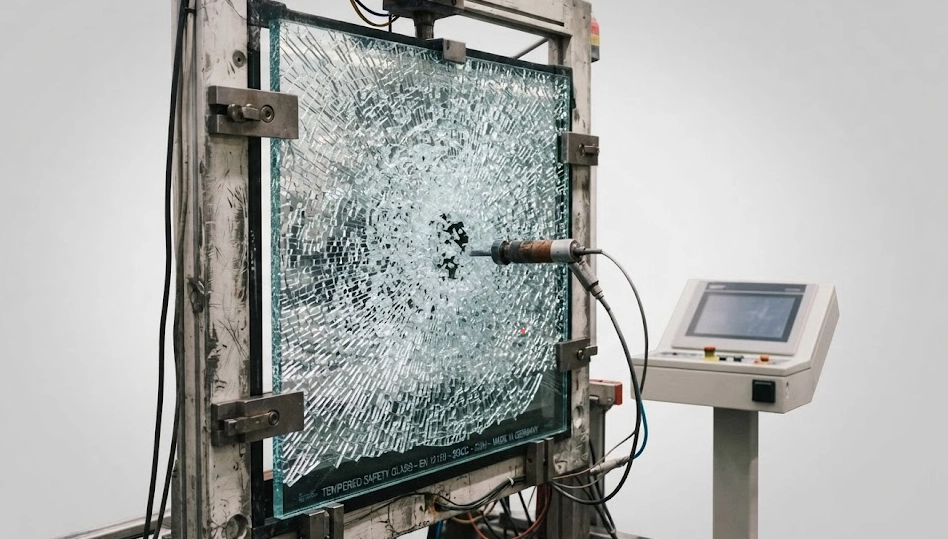
Fully toughened glass is designed for safety-glazing applications where its breakage characteristics are important. Heat-strengthened glass provides increased strength and thermal resistance but is not generally considered a safety glazing material by itself.
Laminated glass solves a different problem.
Instead of relying primarily on small fragments after breakage, laminated glass uses an interlayer to hold broken glass together. This makes it particularly useful where glass falling out of the opening would create a serious hazard.
A simplified comparison:
Toughened glass → strength + safer fracture pattern
Laminated glass → glass retention after breakage
Toughened laminated glass → strength + retention
For overhead glazing, sloped glazing, certain balcony systems and applications where glass fallout is unacceptable, laminated construction may be more appropriate than monolithic toughened glass.
3. Do Not Buy on Thickness Alone
A thicker pane is not automatically a better product.
Glass selection should consider:
Glass size
Aspect ratio
Wind pressure
Snow load where applicable
Impact requirements
Support conditions
Fixing method
Thermal conditions
Edge configuration
Hole and cut-out requirements
Whether the glass is monolithic or laminated
A large 8 mm pane and a small 8 mm pane do not necessarily experience the same stresses.
This is particularly important for large toughened safety glass panels, glass facades and frameless systems. The support system and expected glass deflection should be considered during design. ASTM's specification for heat-treated flat glass also recognizes the importance of fabrication requirements and support conditions.
4. Pay Attention to Fabrication Before Tempering
This is one of the most important details for buyers.
Once glass has been fully toughened, it generally cannot be cut, drilled or notched in the normal way. Required holes, cut-outs, edgework and other fabrication need to be completed before tempering.
Therefore, your purchase specification should clearly identify:
Overall dimensions
Hole positions
Hole diameter
Corner radius
Notches
Cut-outs
Edge polishing
Beveling requirements
Surface treatment
Printing or ceramic coating
Required tolerances
This is particularly important for glass doors and hardware-mounted systems.
A mistake of only a few millimeters in a drilled hole can make an otherwise high-quality glass panel unusable.
For B2B buyers, this means drawing confirmation should happen before production, not after the glass has entered the tempering process.
5. Inspect Optical Quality, Not Just Strength
A glass panel can meet a strength requirement and still be disappointing visually.
Large architectural glass is often viewed under strong daylight, artificial lighting or reflections. Slight optical distortion can become obvious after installation.
When purchasing high-quality toughened glass for commercial buildings, ask about:
Roller-wave distortion
Overall flatness
Surface cleanliness
Scratches
Edge chips
Bubbles or inclusions
Coating uniformity
Color consistency
Visible tempering marks
Heat-treated glass can also display a strain pattern under certain lighting conditions. This is a recognized characteristic rather than necessarily a manufacturing defect.
For projects involving large shopfronts, curtain walls or high-end interiors, requesting physical samples or discussing acceptable visual tolerances with the supplier can prevent disputes later.
6. Consider Heat-Soaked Toughened Glass for Higher-Risk Projects
Standard toughened glass can, in rare cases, experience spontaneous breakage associated with nickel sulfide inclusions.
For applications where unexpected breakage could cause major consequences, buyers may consider heat-soaked toughened safety glass.
Heat soaking is an additional testing process intended to identify susceptible panes before they are installed. It is particularly relevant to certain structural, facade, barrier and overhead applications.
However, heat soaking should not simply be treated as a universal upgrade.
The right question is:
What is the consequence if this pane breaks after installation?
If a replacement is inexpensive and the pane is installed in a low-risk interior location, the additional process may not provide the same value as it would for a large overhead or high-level facade panel.
7. Evaluate the Supplier's Quality Control
The supplier matters almost as much as the glass specification.
When comparing a toughened safety glass manufacturer with a trading company, buyers should examine whether the supplier can control the complete process.
A reliable supplier should have a clear workflow covering:
Raw glass inspection → cutting → edge processing → drilling → washing → tempering → inspection → packing → shipment
Ask whether the supplier can provide:
Production drawings
Sample approval
Glass specifications
Tempering records where applicable
Inspection reports
Packing photos
Loading photos
Traceability information
Export experience
For large B2B orders, consistent quality between batches is often more important than obtaining the lowest initial quotation.
8. Packaging Is Part of Product Quality
Even perfectly manufactured glass can arrive damaged if the packaging is poor.
For international shipments, buyers should pay attention to:
Strong export crates
Moisture protection
Separation between glass sheets
Edge protection
Anti-shock measures
Proper crate labeling
Container loading method
Ask the supplier to provide actual loading photographs before shipment when possible.
This small step can reveal whether the supplier has practical experience with international glass transportation.
Why Choose Moluoni for Toughened Safety Glass Sourcing?
For international buyers looking for architectural and construction glass, Moluoni can be considered as a sourcing partner for projects requiring different glass configurations and export-oriented supply support.
The important point is not simply purchasing a pane of glass. A good supplier should help buyers match the glass specification with the actual project requirements, including dimensions, processing, safety requirements and application conditions.
For distributors, contractors and project buyers, this approach can reduce the risk of ordering a technically unsuitable product and discovering the problem only after delivery.