
 EN
EN VI
VI IT
IT ES
ES TH
TH PT
PT LV
LV NL
NL RU
RU FR
FR DE
DE AR
AR UZ
UZ

Optimize Global Supply Chain Layout: Moluoni Obtains Freight
Glass is one of the most widely used inorganic non-metallic materials in modern buildings. Because of its good light transmission, decorative effect, and functionality, it is widely used in residential buildings, commercial buildings, hotels, and office buildings. With the increasing requirements for energy saving and safety in buildings, glass products have developed into many different types, such as tempered glass, insulated glass, laminated glass, Low-E glass, and switchable glass.
Among them, insulated glass and laminated glass are the two most commonly used functional glasses in building doors and windows. Although they look similar, there are clear differences in sound insulation, thermal insulation, safety performance, and application scenarios. Understanding their features and differences helps in choosing a more suitable glass solution according to project needs.
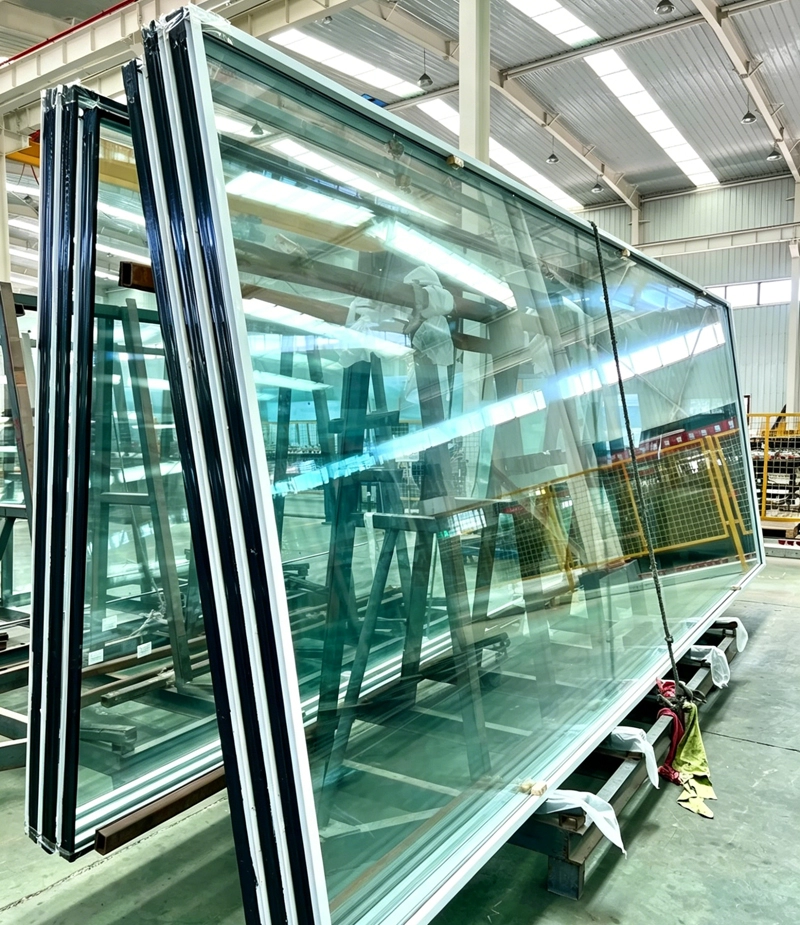
What is Insulated Glass
Insulated glass (Insulating Glass) is a new type of building material that has good thermal insulation and sound insulation performance, is aesthetically pleasing and practical, and can also reduce the self-weight of buildings. It is made of two or three pieces of glass. A high-strength and high-air-tight composite adhesive is used to bond the glass with an aluminum spacer frame filled with desiccant. The middle part forms an air layer or is filled with inert gases such as argon, so it becomes a high-performance sound and heat insulating glass.
What is Laminated Glass
Laminated glass is also called safety glass or sandwich glass. It is made by placing a strong and flexible PVB (polyvinyl butyral) interlayer between two or more sheets of float glass. After hot pressing and removing as much air as possible, it is then put into an autoclave. Under high temperature and high pressure, the remaining small amount of air is absorbed into the interlayer, forming a strong bonded structure.
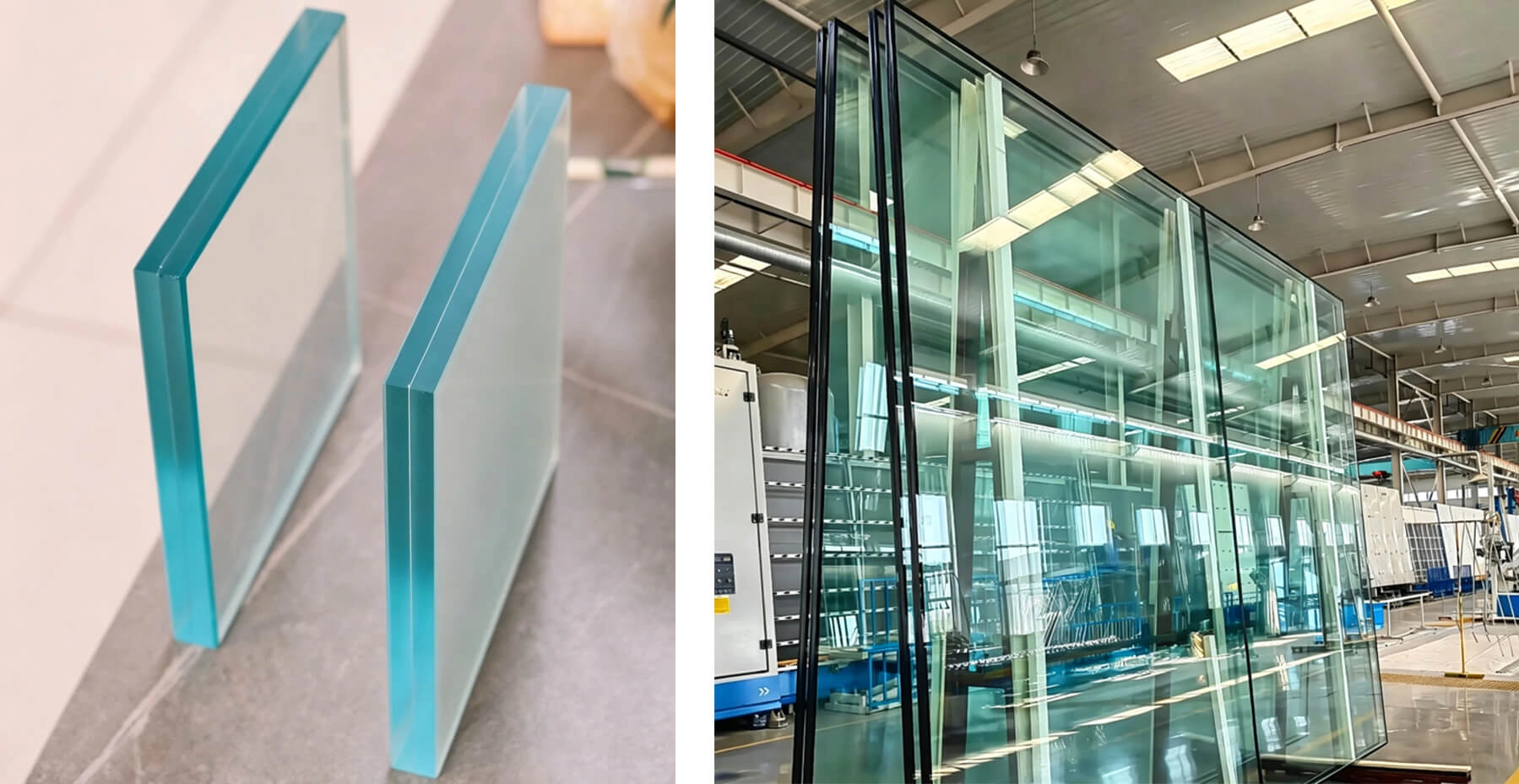
Compared with ordinary glass, laminated glass has better impact resistance and safety performance, and also provides functions such as anti-seismic, anti-theft, and explosion resistance.
Main Differences Between Insulated Glass and Laminated Glass
1. Thermal Insulation and Safety Performance
To some extent, both laminated glass and insulated glass provide sound insulation and thermal insulation, but their focus is different.
Laminated glass has better anti-seismic, explosion-proof, and safety performance. Insulated glass has much better thermal insulation performance than laminated glass. The air layer or inert gas inside insulated glass can effectively reduce heat transfer, so it has better energy-saving performance, while laminated glass has relatively weaker thermal insulation performance.
2. Sound Insulation Performance Differences
There are also clear differences in sound insulation performance.
Because laminated glass has good shock absorption performance, it produces less noise caused by vibration, especially in strong wind conditions. It performs better in reducing low and mid-frequency noise.
In comparison, insulated glass may sometimes produce resonance, and its performance in blocking low-frequency noise is slightly weaker than laminated glass. However, it still performs well in reducing general environmental noise and external noise.
3. Wind Pressure Resistance
The air or inert gas inside insulated glass can improve the overall structural strength, so it has better wind pressure resistance.
Laminated glass also has certain wind pressure resistance because the glass layers are bonded together by the interlayer. However, its overall performance is usually slightly lower than insulated glass.
Features and Applications of the Two Types of Glass
Insulated glass has the advantages of wide application range, excellent thermal insulation performance, and good energy-saving effect. It also provides relatively good sound insulation. Because of the air layer or inert gas layer in the middle, it can effectively reduce heat transfer. Therefore, it is widely used in building doors and windows, façade glass of sunrooms (except roof glass), and projects that require high energy-saving and thermal insulation performance in residential, office, and commercial buildings.
However, in environments with strong low-frequency noise, such as near railways or main roads, and in sunroom roof structures, insulated glass is not an ideal choice.
Laminated glass has excellent safety performance and strong anti-seismic and explosion-proof properties. Its sound insulation performance is usually better than insulated glass, especially in reducing low and mid-frequency noise. However, compared with insulated glass, its thermal insulation performance is relatively weaker.
Based on these features, laminated glass is more suitable for sunroom roof glass, indoor partitions, and other applications that require high safety or good sound insulation. However, for bay windows, south-facing bedrooms, and other areas with high thermal insulation requirements, laminated glass is usually not the best choice.
How to Choose Between Laminated Glass and Insulated Glass?
In fact, laminated glass and insulated glass both have their advantages. It is not correct to simply say which one is better. The choice should depend on actual project requirements.
If the project focuses more on thermal insulation and energy-saving performance, such as residential exterior windows and office building windows, insulated glass is usually the more suitable choice.
If the project focuses more on safety performance and low-to-mid frequency sound insulation, such as sunroom roofs, indoor partitions, or buildings near traffic roads, laminated glass has a greater advantage.
Therefore, double laminated glass and double insulated glass do not have an absolute superiority or inferiority. The key is to choose based on specific requirements for thermal insulation, sound insulation, safety, and application scenarios.